




- Free Estimates - New or Replacement
- Honest Upfront Pricing
- Financing Available
- Licensed & Insured
Contact Us
Mini Split Installation in Vista, CA
Professional Ductless Heating and Cooling
Add efficient, room-by-room comfort without installing bulky ductwork. Airmerica Air Conditioning & Heating provides professional mini split installation in Vista, CA, for bedrooms, home offices, garages, ADUs, additions, workshops, and whole-home zoned comfort systems.
We help Vista homeowners choose the right system size, indoor unit style, number of zones, and equipment configuration for reliable heating and cooling throughout the year.
Call 858-663-2551 Request a Mini Split Installation Estimate
Efficient Ductless Comfort Designed for Your Vista Home
A ductless mini split is a flexible heating and cooling system that connects one or more indoor air-handling units to an outdoor heat pump. Because conditioned air is delivered directly into the room, the system does not depend on traditional ductwork to distribute comfort.
This makes mini splits especially useful in homes where extending or replacing ducts would be expensive, disruptive, or impractical. They are also a popular choice for homeowners who want independent temperature control in specific rooms instead of heating or cooling the entire house to satisfy one uncomfortable area.
Airmerica installs single-zone and multi-zone ductless systems for homeowners throughout Vista, including properties near Shadowridge, Buena Creek, Brengle Terrace, Vista Village, Alta Vista, and the surrounding North County communities.
For broader home comfort needs, visit our page about heating and air conditioning in Vista.
Why Vista Homeowners Choose Mini Split Systems
Vista homes vary widely in age, layout, insulation, and existing HVAC design. Some properties have older duct systems, while others include additions, converted garages, detached structures, or rooms that were never connected to the home’s central heating and cooling system.
Mini splits provide a practical solution because they can be installed where comfort is needed without requiring a major ductwork renovation.
Room-by-Room Temperature Control
Each indoor unit has its own thermostat or controller. Homeowners can adjust temperatures independently instead of relying on a single central thermostat to represent the comfort needs of every room.
Heating and Cooling from One System
Most modern mini splits are ductless heat pumps. They provide air conditioning during warm weather and reverse operation to provide efficient heating when temperatures fall.
Reduced Energy Loss
Traditional duct systems can lose conditioned air through leaks, loose connections, damaged insulation, or poorly designed runs. Mini splits deliver air directly into the conditioned space, eliminating most duct-related losses.
Quiet Operation
Mini split indoor units are designed for low-noise operation, making them well suited for bedrooms, offices, nurseries, guest rooms, and other areas where a loud window unit or portable air conditioner would be distracting.
Flexible Installation
Indoor units are available in wall-mounted, ceiling cassette, concealed-duct, and floor-mounted configurations. The right style depends on the room layout, available wall or ceiling space, appearance preferences, and system design.
Where Mini Splits Work Best
Ductless systems can serve a single problem room or provide zoned comfort across several areas of a home. Airmerica commonly recommends mini splits for spaces where central HVAC is unavailable, inefficient, or difficult to extend.
Accessory Dwelling Units and Casitas
ADUs often require an independent heating and cooling solution. A mini split can provide year-round comfort without connecting the unit to the primary home’s duct system.
Garages and Workshops
Converted garages, hobby rooms, fitness spaces, and workshops can become uncomfortable during warm Vista afternoons. A properly sized mini split can make these spaces usable throughout more of the year.
Room Additions
Extending an existing duct system into an addition may reduce airflow elsewhere in the home or require significant modifications. A dedicated ductless system allows the new space to operate independently.
Home Offices
A mini split can maintain a comfortable office temperature without forcing the central system to condition every room during the workday.
Upstairs Bedrooms and Bonus Rooms
Upper floors often experience greater heat gain than lower levels. A dedicated indoor unit can help correct hot-room problems without excessively lowering the thermostat for the entire house.
Older Homes Without Existing Ductwork
Installing conventional ductwork in an older home can require opening walls, lowering ceilings, or using valuable attic and closet space. Mini splits offer an alternative that preserves more of the existing structure.
Guest Rooms and Detached Structures
Detached offices, guest suites, pool houses, and similar spaces can receive independent comfort without tying into the main home’s heating and air conditioning system.
Single-Zone vs. Multi-Zone Mini Split Installation
One of the first decisions in a ductless project is whether the property needs a single-zone or multi-zone system. The correct choice depends on how many rooms need conditioning, how those spaces are used, and whether individual temperature control is important.
Single-Zone Mini Split Systems
A single-zone system connects one indoor unit to one outdoor unit. It is often the best option for a garage, addition, office, bedroom, workshop, studio, or other individual space.
Single-zone systems offer straightforward control and can be highly efficient because the equipment is selected specifically for one room or defined area.
Multi-Zone Mini Split Systems
A multi-zone system connects several indoor units to one outdoor unit. Each indoor unit can usually be controlled independently, allowing different rooms to maintain different temperatures.
Multi-zone systems may be appropriate for an entire small home, several bedrooms, an ADU with multiple rooms, or a property where multiple areas lack adequate central heating and cooling.
Which Configuration Is Better?
There is no universal answer. A multi-zone system reduces the number of outdoor units, but separate single-zone systems may provide greater equipment flexibility or efficiency in certain layouts. Airmerica evaluates the number of rooms, distance between indoor and outdoor units, electrical requirements, available mounting locations, and expected system usage before recommending a design.
Mini Split Systems Are Ductless Heat Pumps
A mini split is not simply a wall-mounted air conditioner. Most systems use heat pump technology to provide both cooling and heating.
During cooling operation, the system transfers heat from inside the home to the outdoors. During heating operation, it reverses the refrigeration cycle and transfers available heat from the outdoor air into the home.
Modern inverter-driven compressors can adjust their operating speed instead of repeatedly turning on and off at full capacity. This variable operation helps maintain steadier temperatures, reduce energy waste, and improve comfort during changing weather conditions.
Homeowners considering a larger central system can also learn about heat pump installation in Vista and air conditioning installation.
Mini Split vs. Central Air Conditioning
Both systems can provide effective cooling, but they serve homes differently. Central air conditioning distributes conditioned air through ducts and is typically controlled by one thermostat. Mini splits deliver air directly into individual rooms or zones.
A Mini Split May Be the Better Choice When:
- The home does not have existing ductwork.
- Only one or two rooms need heating and cooling.
- An ADU, garage, office, or addition needs an independent system.
- Different rooms require different temperature settings.
- Extending the existing duct system would be difficult or inefficient.
- The homeowner wants to reduce reliance on portable or window air conditioners.
Central Air May Be the Better Choice When:
- The home already has properly designed and well-sealed ductwork.
- The goal is consistent whole-home comfort from one centrally controlled system.
- The homeowner prefers concealed supply registers instead of visible indoor units.
- The existing system is being replaced as part of a broader HVAC upgrade.
Some homes benefit from a hybrid approach. The main house may continue using central air conditioning while a mini split serves an addition, upstairs bedroom, garage, or detached structure.
Mini Split vs. Window and Portable Air Conditioners
Window and portable air conditioners can provide temporary relief, but they usually do not offer the efficiency, quiet operation, security, appearance, or heating capability of a professionally installed mini split.
Portable units often require a window exhaust hose and may struggle to cool larger rooms. Window units can block natural light, create exterior noise, and leave an opening that affects security and insulation.
A mini split is permanently installed, designed for the room’s heating and cooling load, and typically operates much more quietly. Because many systems also provide heat, they can replace separate cooling and heating appliances.
Proper Mini Split Sizing Matters
Choosing a mini split based only on square footage can lead to poor comfort, higher energy use, excessive cycling, and shortened equipment life. Proper sizing requires a closer look at how the room gains and loses heat throughout the day.
Airmerica evaluates the space before recommending equipment capacity. Important factors include room dimensions, ceiling height, insulation levels, window size, sun exposure, wall construction, occupancy, appliance heat, room orientation, and how the space will be used.
Problems Caused by an Oversized Mini Split
An oversized system may cool the room too quickly and shut off before completing a full operating cycle. This can create temperature swings, reduce humidity control, increase equipment cycling, and make the room feel less comfortable even when the thermostat reaches the selected setting.
Problems Caused by an Undersized Mini Split
An undersized system may run continuously without reaching the desired temperature during Vista’s warmer afternoons. Constant operation can increase energy use, place unnecessary strain on the equipment, and leave the room uncomfortable.
Why Load Calculations Are Important
A professional load calculation estimates how much heating and cooling capacity a room or home needs under expected weather conditions. This allows the installer to select equipment that can maintain comfort efficiently without relying on guesswork.
Proper sizing is especially important for garages, ADUs, additions, rooms with large windows, vaulted ceilings, limited insulation, or strong afternoon sun exposure.
What Affects the Cost of Mini Split Installation?
The cost of mini split installation in Vista depends on the equipment selected, the number of rooms being conditioned, the complexity of the installation, and the electrical or structural work required. A single-room installation is typically less involved than a multi-zone system serving several areas.
Number of Indoor Units
A single-zone system uses one indoor unit and one outdoor unit. Multi-zone systems require additional indoor units, refrigerant lines, drains, controls, mounting hardware, and labor.
System Capacity and Efficiency
Higher-capacity systems and equipment with advanced efficiency ratings, variable-speed compressors, enhanced filtration, Wi-Fi controls, or premium indoor unit designs may affect the total project cost.
Indoor Unit Style
Wall-mounted units are common, but ceiling cassettes, floor-mounted units, and concealed ducted units may require additional framing, ceiling access, duct connections, or finish work.
Refrigerant Line Length
The distance between the indoor and outdoor units affects the amount of line-set material, protective covering, labor, and refrigerant adjustment required.
Electrical Requirements
Mini split systems require a dedicated electrical circuit, disconnect, and properly sized wiring. Some homes may need electrical panel work or coordination with a qualified electrician before installation.
Mounting and Access Conditions
Second-story installations, limited attic access, masonry walls, difficult exterior access, or long routing paths can increase installation complexity.
Permits and Code Requirements
Permit requirements may vary depending on the project scope and local regulations. Professional installation helps ensure the system meets applicable mechanical, electrical, refrigerant, drainage, and equipment-clearance requirements.
The most accurate way to understand the cost is to schedule an in-home evaluation. Airmerica can review the space, discuss comfort goals, recommend equipment options, and explain the factors that influence the installation estimate.
Choosing the Best Indoor Unit Location
Indoor unit placement affects airflow, temperature consistency, noise, appearance, drainage, and service access. The unit should be positioned where conditioned air can circulate throughout the intended zone without being blocked by furniture, cabinets, beams, or architectural features.
Installation height also matters. Wall-mounted units are typically placed high enough to distribute air effectively while remaining accessible for filter cleaning and maintenance.
Avoiding Airflow Obstructions
The indoor unit should not discharge directly into a wall, tall furniture, curtains, or another obstruction. Restricted airflow can reduce comfort and cause the system to work harder.
Considering Beds, Desks, and Seating Areas
Direct airflow may feel uncomfortable when aimed continuously at a bed, desk, sofa, or dining area. Airmerica considers how the room is arranged and how occupants use the space before selecting the final location.
Planning for Condensate Drainage
Mini splits remove moisture from indoor air during cooling operation. The condensate must drain safely through a properly routed gravity drain or approved condensate pump when gravity drainage is not possible.
Maintaining Service Access
The unit must remain accessible for filter cleaning, coil service, drainage inspection, and future repairs. Installing equipment in a visually hidden but inaccessible location can create maintenance problems later.
Outdoor Unit Placement
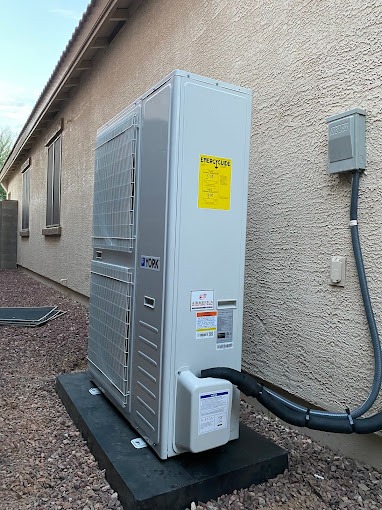
The outdoor unit needs adequate airflow, stable support, appropriate clearances, and reasonable service access. It may be installed on a ground-mounted pad, wall bracket, rooftop support, or another approved mounting system depending on the property.
Placement should also consider bedrooms, patios, walkways, property lines, drainage areas, landscaping, and the distance to each indoor unit.
Airflow and Clearance
Outdoor units require open space around the coil and fan. Crowded installations near fences, shrubs, walls, or stored items can restrict airflow and reduce performance.
Noise Considerations
Modern mini splits are designed for quiet operation, but the outdoor unit should still be placed thoughtfully to reduce sound near bedroom windows, outdoor seating areas, and neighboring properties.
Protection from Water and Debris
The unit should not be placed where roof runoff, irrigation, standing water, leaves, or debris can interfere with operation. Proper elevation and drainage help protect the equipment.
Our Mini Split Installation Process
Professional installation involves more than mounting equipment on a wall. Airmerica follows a detailed process designed to support dependable comfort, efficiency, safety, and long-term system performance.
1. In-Home Comfort Evaluation
We begin by discussing which rooms are uncomfortable, how the space is used, preferred temperature settings, appearance concerns, and whether the system will supplement or replace existing heating and cooling equipment.
2. Load and Capacity Review
We evaluate the room dimensions, insulation, windows, sun exposure, ceiling height, occupancy, and other conditions that affect heating and cooling demand.
3. Equipment and Zone Selection
Airmerica recommends a single-zone or multi-zone configuration based on the number of spaces being conditioned and the needs of the property. We also review indoor unit styles, efficiency options, controls, and outdoor-unit capacity.
4. Placement Planning
We identify practical locations for the indoor and outdoor equipment, refrigerant lines, electrical connections, condensate drains, and protective line-set covers.
5. Professional Installation
The equipment is securely mounted, refrigerant lines are installed and insulated, condensate drainage is routed, electrical components are connected, and all penetrations are sealed.
6. Refrigerant and System Testing
The refrigerant circuit must be properly evacuated and tested to remove air and moisture before startup. Connections, pressures, temperatures, airflow, drainage, and controls are checked to confirm proper operation.
7. Startup and Homeowner Orientation
After installation, we test heating and cooling performance and explain how to use the thermostat or remote control, adjust fan settings, clean filters, operate multiple zones, and recognize when maintenance may be needed.
Why Professional Installation Is Important
Mini split systems are sometimes marketed as simple installation projects, but mistakes involving sizing, refrigerant lines, drainage, electrical work, equipment placement, or startup procedures can create expensive problems.
Improper installation can result in refrigerant leaks, water damage, poor airflow, electrical issues, excessive noise, reduced efficiency, premature equipment failure, and warranty concerns.
Professional installation helps ensure the system is selected, mounted, connected, tested, and commissioned according to manufacturer requirements and applicable codes.
Mini Split Replacement in Vista
Older ductless systems may eventually lose efficiency, require frequent repairs, develop refrigerant leaks, or struggle to maintain comfortable temperatures. Replacement may be more practical when repair costs continue to rise or the equipment no longer meets the needs of the space.
Newer systems may offer improved efficiency, quieter operation, better temperature control, updated refrigerants, Wi-Fi compatibility, and more flexible indoor unit options.
Airmerica can evaluate the existing system, determine whether repair or replacement is the more reasonable option, and recommend equipment that matches the current heating and cooling load.
Mini Split Maintenance After Installation
Routine maintenance helps protect the investment and maintain dependable performance. Homeowners should clean or inspect washable filters regularly and keep furniture, curtains, and other obstructions away from the indoor unit.
Professional maintenance may include cleaning the indoor coil and blower wheel, checking the condensate drain, inspecting refrigerant connections, testing electrical components, cleaning the outdoor coil, verifying system temperatures, and confirming that each zone responds properly.
Regular service is especially helpful in homes with pets, ongoing construction dust, heavy system use, or indoor units installed in kitchens, workshops, garages, and other demanding environments.
Homeowners with central equipment can also learn more about air conditioning maintenance in Vista and heat pump repair.
Mini Split Comfort for Vista Homes, ADUs, and Additions
Vista’s mix of established neighborhoods, newer developments, hillside properties, ADUs, converted garages, and remodeled homes creates many situations where ductless heating and cooling makes sense. A mini split can solve an isolated comfort problem without requiring a complete redesign of the home’s existing HVAC system.
Homes in Shadowridge, Buena Creek, Alta Vista, Brengle Terrace, Vista Village, and surrounding neighborhoods may have very different construction styles, insulation levels, sun exposure, and existing equipment. Airmerica evaluates the actual space instead of assuming that one system design will work for every property.
Comfort During Warm Inland Afternoons
Vista can experience warmer afternoon temperatures than communities closer to the coast. Rooms with west-facing windows, limited insulation, vaulted ceilings, or second-story exposure may become uncomfortable even when the rest of the home feels fine.
A properly sized mini split can provide targeted cooling where it is needed without forcing the central air conditioner to run longer for the entire house.
Efficient Heating During Cooler Weather
Although Vista winters are generally mild, bedrooms, offices, ADUs, garages, and detached spaces can still become uncomfortable during cool mornings and evenings. Because mini splits use heat pump technology, they can provide efficient heating without requiring a separate furnace in the conditioned area.
A Practical Option for ADUs
Accessory dwelling units often need independent temperature control, simple equipment placement, and efficient operation in a limited space. A single-zone or multi-zone mini split can provide heating and cooling without connecting the ADU to the primary home’s duct system.
Comfort for Remodeling Projects
When a garage, patio, attic, bonus room, or unused area is converted into living space, the existing HVAC system may not have enough capacity or airflow to support the new room. Installing a dedicated mini split can avoid placing additional strain on the central system.
Should You Add a Mini Split to an Existing Central HVAC System?
A mini split does not always need to replace central heating and cooling. In many homes, it works best as a supplemental system for a room that remains uncomfortable because of duct limitations, sun exposure, distance from the air handler, or differences in how the space is used.
For example, a homeowner may continue using central air conditioning throughout the main living areas while adding a ductless system to an upstairs bedroom, home office, garage, addition, or detached guest suite.
If uneven temperatures are related to damaged, undersized, or poorly configured ducts, Airmerica can also evaluate whether ductwork repair or modification may improve airflow before a supplemental system is added.
Can a Mini Split Cool an Entire House?
A mini split system can heat and cool an entire home when it is designed with the correct capacity, number of zones, indoor unit locations, and outdoor equipment. Whole-home ductless systems are often most practical in smaller homes, properties without existing ducts, and layouts that allow conditioned air to circulate effectively.
Some homes require multiple indoor units to maintain even temperatures. Bedrooms with closed doors, separate living areas, multiple floors, and rooms with different exposure conditions may each need independent zoning.
A whole-home recommendation should be based on a detailed evaluation rather than the total square footage alone. Airmerica considers room layout, insulation, window area, occupancy, ceiling height, sun exposure, and how each space is used before proposing a system design.
Mini Split Efficiency and Energy Use
Mini splits can be highly efficient because they avoid most duct losses and use inverter-driven compressors that adjust capacity to match the heating or cooling demand. Instead of repeatedly starting and stopping at full output, the system can operate at lower speeds for longer periods to maintain a steadier temperature.
Actual energy use depends on equipment efficiency, system sizing, thermostat settings, insulation, outdoor conditions, maintenance, and how many zones operate at the same time.
Zoning may reduce unnecessary energy use because homeowners can condition occupied rooms without maintaining the same temperature in every area. However, the system must still be sized and operated correctly to achieve the expected benefit.
Mini Split Controls and Smart Features
Most ductless systems include a handheld remote or wall-mounted controller. Depending on the equipment selected, homeowners may also have access to programmable schedules, Wi-Fi control, smartphone applications, occupancy sensors, sleep modes, fan adjustments, and individual zone settings.
Controls vary by manufacturer and model, so Airmerica reviews available features during the equipment-selection process. For homes that also use central heating and cooling, our thermostat services in Vista can help improve control of compatible HVAC equipment.
Why Choose Airmerica for Mini Split Installation in Vista?
Airmerica Air Conditioning & Heating is family-owned and locally operated in Vista, providing professional HVAC installation throughout North County San Diego. Our team focuses on proper system sizing, thoughtful equipment placement, code-compliant installation, clean workmanship, and complete startup testing.
- Family-owned and locally operated in Vista
- Licensed & insured
- California Contractor License #1064129
- Free estimates on new HVAC systems
- Financing options available
- Single-zone and multi-zone mini split installation
- Professional equipment sizing and system design
- Installation for ADUs, garages, additions, offices, bedrooms, and whole-home applications
Local Vista HVAC Experience
Airmerica serves Vista and surrounding North County San Diego communities. We understand the region’s climate, varied home construction, common comfort problems, and the growing demand for efficient solutions in ADUs, additions, garages, offices, and detached spaces.
System Recommendations Based on the Property
We do not recommend equipment based solely on a room’s square footage. Our team considers insulation, windows, ceiling height, exposure, layout, occupancy, and intended use before selecting system capacity and configuration.
Single-Zone and Multi-Zone Installation
Whether the project involves one uncomfortable bedroom or several areas throughout the home, Airmerica can design a single-zone or multi-zone system that supports independent comfort and practical equipment placement.
Attention to Installation Details
Refrigerant lines, drains, wiring, mounting hardware, wall penetrations, outdoor clearances, and equipment supports must all be installed correctly. Careful attention to these details helps protect efficiency, reliability, appearance, and long-term performance.
Complete System Testing
After installation, we verify drainage, airflow, controls, electrical operation, temperatures, refrigerant-system performance, and communication between indoor and outdoor equipment.
Clear Homeowner Guidance
We explain how to operate the system, adjust individual zones, clean filters, use available controls, and recognize when professional maintenance may be needed.
Schedule Mini Split Installation in Vista, CA
If you need efficient heating and cooling for an ADU, garage, addition, bedroom, office, guest suite, workshop, or whole home, Airmerica can help you determine whether a ductless system is the right solution.
Our team will evaluate the space, review single-zone and multi-zone options, discuss equipment placement, and recommend a properly sized system based on the property’s actual comfort needs.
Call Airmerica Air Conditioning & Heating at 858-663-2551 or request a mini split installation estimate today.
Frequently Asked Questions About Mini Split Installation
Are mini splits a good choice for homes in Vista, CA?
Yes. Mini splits are a practical option for many Vista homes because they provide efficient heating and cooling without traditional ductwork. They are especially useful for older homes, ADUs, garages, additions, offices, bedrooms, and detached structures.
Can a mini split heat and cool my home?
Yes. Most modern mini splits are ductless heat pumps that provide cooling during warm weather and reverse operation to provide heating during cooler conditions.
What is the difference between a single-zone and multi-zone mini split?
A single-zone system connects one indoor unit to one outdoor unit and serves one room or defined area. A multi-zone system connects multiple indoor units to one outdoor unit, allowing several rooms to have independent temperature control.
Where can a mini split be installed?
Mini splits can be installed in bedrooms, home offices, garages, workshops, ADUs, additions, sunrooms, guest suites, converted attics, detached buildings, and many other spaces that need independent heating and cooling.
How do I know what size mini split I need?
The correct size depends on room dimensions, insulation, ceiling height, windows, sun exposure, occupancy, wall construction, and how the space is used. A professional load evaluation helps determine the appropriate capacity.
Can a mini split cool an entire house?
Yes, but the home may require multiple indoor units and carefully planned zones. Whole-home ductless systems work best when capacity, equipment placement, room layout, and individual heating and cooling loads are evaluated before installation.
Do mini splits work during winter?
Yes. Ductless heat pumps can provide efficient heating during Vista’s mild winter conditions. Performance depends on equipment selection, sizing, outdoor temperature, and installation quality.
Are mini splits noisy?
Modern indoor and outdoor mini split units are generally designed for quiet operation. Proper sizing, secure mounting, correct refrigerant-line installation, and thoughtful equipment placement can further reduce unwanted sound.
Do mini splits require regular maintenance?
Yes. Homeowners should clean or inspect the indoor filters regularly, while professional maintenance can include coil cleaning, drain inspection, electrical testing, refrigerant-system checks, outdoor-unit cleaning, and performance verification.
Can I install a mini split in my garage?
Yes. Garages, workshops, fitness rooms, and converted workspaces are common mini split applications. The equipment must be sized for insulation, door exposure, ceiling height, sun load, and how frequently the garage door is opened.
Do mini splits require permits?
Permit requirements depend on the project scope and applicable local regulations. The installation may involve mechanical, electrical, structural, refrigerant, drainage, and equipment-clearance requirements.
How long do mini split systems last?
System life varies based on equipment quality, installation, climate, maintenance, usage, and operating conditions. Proper sizing, professional installation, regular filter care, and routine service can help support longer equipment life.
Can a mini split increase my home’s value?
A professionally installed mini split may improve a property’s appeal by adding efficient heating and cooling to spaces that previously lacked dependable comfort. The effect on value depends on the home, installation quality, equipment, and local buyer preferences.
Why choose Airmerica for mini split installation in Vista?
Airmerica provides locally focused mini split installation with careful sizing, system design, equipment placement, code-compliant workmanship, complete startup testing, and homeowner guidance for long-term comfort.
We offer financing
Prefer to pay over time rather than all at once? Prequalify for financing today and contact us to learn more about our services!
.svg)
What Your Neighbors Are Saying About Us
EXCELLENT Based on 106 reviews
 Posted on Google
 Julia KTyler has come to my house twice. He’s professional courteous and a pleasure to chat with. He also is great with my barky dog. I’ll continue to use the company service.Posted on Google
 YOUNG JPrompt,Posted on Google
 Deanna GThree companies could not fix my intermittent AC freeze up problem. They were able to do it! Tyler came out today for my semi-Annual checkup. Pay $180.00 for the year and they keep your system clean and problem free. You can pay by the month. Ryan was able to make my AC work again! Very capable and this company can really fix things the first time.Posted on Google
 Magi PSo very impressed with this company. Our HVAC gave up the ghost Monday afternoon. We called Airmerica immediately and they sent Ryan to our house the next morning. He was so professional and knowledgeable. He did indeed confirm that our HVAC was indeed gone and irreparable. Ryan was very personable, he was very thorough explaining all of our options for a new system. We ordered our new system and the office called to confirm our order. They kept us informed as to when the system would be delivered and then installed. By Friday we had our new system. Camden and Ryder arrived right on time. These sweet young men made our day. They worked very hard throughout the day. I was so impressed with the work ethic of both of these young men. They worked diligently all day long in excruciating heat. They were very respectful of our home, laying down floor protectors and keeping everything neat and tidy as they worked! I must say... my floors looked better after they left then when they arrived. We so enjoyed having these two in our home! We LOVE our new system! Thank you Airmerica, Ryan, Camden and Ryder!Posted on Google
 Jason CGreat service!Posted on Google
 Tania SMy AC was having issues short cycling and Camden came out to run a diagnostic. He found the problem and Airmerica repaired it quickly. Highly recommend and will be reaching out to them for all our needs. Camden was very professional and answered all our questions.Posted on Google
 Kawther HGood job. Thank you!