



- Free Estimates - New or Replacement
- Honest Upfront Pricing
- Financing Available
- Licensed & Insured
Contact Us
Heat Pump Installation in San Marcos, CA
A heat pump can replace separate heating and cooling equipment with one system designed for year-round operation. Airmerica Air Conditioning & Heating provides heat pump installation in San Marcos, CA for homeowners replacing aging equipment, planning an efficiency upgrade, or choosing HVAC for a renovated space.
The equipment is only part of the decision. Because a heat pump operates in both cooling and heating modes, system capacity, airflow, duct condition, electrical requirements, controls, and startup settings all affect the result. Homeowners comparing a complete comfort plan can also turn to Airmerica for heating and air conditioning in San Marcos.
Planning a heat pump upgrade? Call (858) 663-2551 to request a free estimate on a new system.
Is a Heat Pump the Right Upgrade for Your Home?
A heat pump transfers heat rather than producing all of its heat through electric resistance. In cooling mode, it removes heat from the home. In heating mode, it reverses operation and moves available heat indoors. That two-way operation fits San Marcos well, where homes often need substantial cooling through the warm season and moderate heating during cooler periods.
Installation may be worth considering when:
- Your furnace and air conditioner are both approaching replacement.
- Your current equipment needs frequent repairs or no longer keeps rooms evenly comfortable.
- You want heating and cooling from one matched system.
- You are renovating, adding conditioned space, or changing the way rooms are used.
- You want to compare current efficiency ratings and controls with older equipment.
- You need a ducted central system or targeted comfort without extending full ductwork.
A heat pump is not automatically the lowest-cost choice for every property. The right recommendation depends on the existing equipment, energy source, electrical capacity, duct system, building envelope, comfort priorities, and how the home is used. Airmerica evaluates those conditions before recommending a configuration.
Choose Between a Ducted and Ductless Heat Pump
Central Ducted Heat Pumps
A central heat pump connects an outdoor unit to indoor equipment and distributes conditioned air through supply and return ducts. This configuration can be a practical replacement for an existing central air conditioner and furnace when the duct system has enough capacity and is in usable condition.
Existing ducts should not be assumed to be ready simply because they fit the old equipment. Restricted returns, leakage, damaged sections, poor insulation, or imbalanced runs can reduce delivered capacity and create noisy or uneven airflow. Those conditions should be identified before the new system is selected.
Ductless Mini Split Heat Pumps
Ductless systems use one or more indoor units to condition individual rooms or zones. They can work well for additions, garages, offices, converted spaces, and rooms that remain uncomfortable with the central system. Homeowners considering this approach can compare single-zone and multi-zone options through Airmerica’s mini split installation in San Marcos.
Choosing between ducted and ductless equipment is not only a matter of preference. The decision should account for the number of spaces being conditioned, equipment placement, line-set routing, condensate drainage, appearance, sound, and whether existing ducts can serve the home effectively.
Efficiency and Equipment Matching
SEER2 and HSPF2 ratings help compare cooling and heating efficiency under standardized test conditions. They do not replace proper design. A higher-rated outdoor unit will not deliver its intended performance if it is paired with incompatible indoor equipment, connected to restrictive ducts, or set up with incorrect airflow.
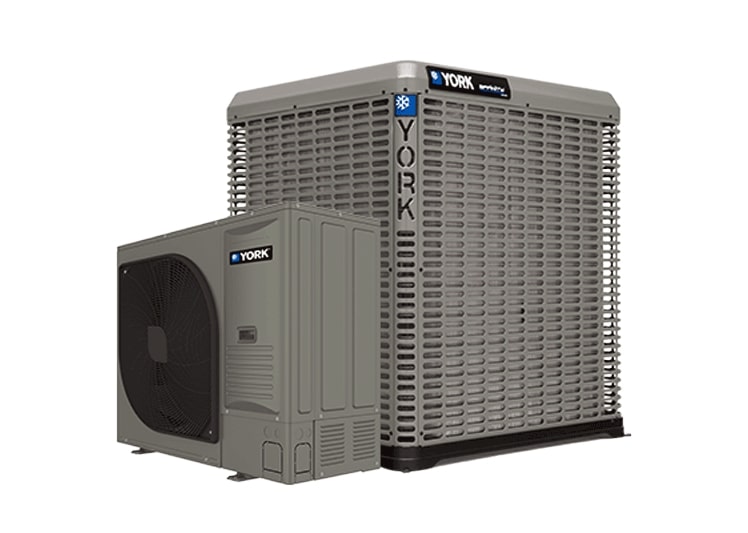
The indoor unit, outdoor unit, thermostat, and any auxiliary heat components need to work as a matched system. Airmerica installs YORK® as a primary equipment brand and helps homeowners compare available configurations based on the home and project goals.
Proper Heat Pump Sizing Starts with the Home
Replacing the old unit with the same tonnage can repeat an earlier sizing mistake. Square footage alone also misses important variables. A load-based evaluation should consider how quickly the home gains and loses heat under local conditions.
Relevant factors include:
- Floor plan, ceiling height, and conditioned square footage
- Insulation levels and air leakage
- Window area, orientation, and shading
- Roof and wall exposure
- Existing supply and return airflow
- West-facing rooms and other recurring comfort problems
- Equipment location and duct conditions
- Heating and cooling capacity at expected outdoor temperatures
An oversized heat pump may satisfy the thermostat quickly and shut off before comfort is even throughout the home. Repeated short cycles can also add wear. An undersized system may run for long periods and still fall behind during hot afternoons. The goal is the right capacity and configuration, not the largest unit that fits.
What Airmerica Evaluates Before Installation
A useful estimate should define more than the equipment model. Airmerica reviews the existing system, listens to room-by-room comfort concerns, and identifies work that could affect installation or performance.
- Existing equipment: The current heating and cooling setup, fuel source, controls, and replacement scope.
- Ducts and airflow: Supply capacity, return pathways, visible leakage or damage, and known hot or cold rooms.
- Electrical needs: Available service, disconnects, circuit requirements, and any changes that must be included in the project.
- Equipment placement: Service clearances, outdoor airflow, indoor access, condensate routing, and line-set routing.
- Controls: Thermostat compatibility, heating and cooling mode changes, and any auxiliary heat control.
- Homeowner priorities: Comfort, sound, zoning, efficiency, budget, and plans for the property.
This evaluation is also the time to separate required work from optional improvements. A clear scope helps homeowners compare proposals on system design and included work instead of comparing equipment labels alone.
What to Expect During Heat Pump Installation
- Confirm the design. The selected indoor and outdoor equipment, capacity, controls, placement, and supporting work are reviewed before installation begins.
- Prepare the work areas. The crew protects access paths, disconnects equipment safely, and removes the old system when replacement is part of the project.
- Set and connect the equipment. Qualified technicians complete refrigerant, electrical, condensate, duct, line-set, and control connections required by the approved scope.
- Set airflow and controls. Blower settings and thermostat functions are configured for the matched equipment and duct system.
- Start and commission the system. Heating and cooling modes, temperature response, airflow, drainage, safety controls, and manufacturer-required setup values are checked before handoff.
- Review operation with the homeowner. The technician explains thermostat use, filter care, normal operation, and the maintenance steps that help protect the new system.
Before the appointment, homeowners can note which rooms are uncomfortable, gather questions about thermostat schedules, and keep equipment access clear. Refrigerant work, line-voltage electrical connections, equipment lifting, and system startup should be left to qualified HVAC professionals.
Commissioning Protects the Installation
A heat pump can turn on without being fully set up. Commissioning is the final quality-control stage that checks whether the installed system operates as designed. Depending on the configuration, this includes confirming the equipment match, airflow, controls, drainage, electrical operation, and refrigerant setup according to manufacturer requirements.
Testing both operating modes matters because a problem may appear only when the reversing valve, thermostat logic, or auxiliary heat controls change state. The homeowner should also understand what normal defrost operation, outdoor-unit sound, and thermostat behavior look like so an unfamiliar but normal cycle is not mistaken for a failure.
When Repair May Still Be the Better Choice
Not every comfort problem requires replacement. A repair may make sense when the system is otherwise in serviceable condition, the problem is isolated, and expected performance can be restored at a reasonable cost. Airmerica’s heat pump repair service in San Marcos can identify whether the issue involves controls, airflow, electrical components, refrigerant, drainage, or another repairable condition.
Replacement becomes more reasonable to evaluate when repair needs are recurring, major components are failing, equipment is mismatched, comfort remains poor, or planned duct and electrical work changes the economics of keeping the old system. Airmerica explains the findings so homeowners can compare the immediate repair with the scope and long-term use of a new system.
Heat Pump Planning for San Marcos Homes
San Marcos combines a long, warm cooling season with mild winter heating needs. A heat pump may spend much more time cooling than heating, but both modes still need to be designed and tested correctly. Afternoon sun, attic and duct heat gain, insulation, window exposure, and room layout can change the load even between similar-sized homes.
Airmerica serves homeowners near San Elijo Hills, Lake San Marcos, Discovery Hills, Twin Oaks Valley, Richland, and surrounding San Marcos neighborhoods. Local service does not mean using one standard system for every address. It means evaluating how the property, equipment location, and homeowner priorities affect the installation.
Why Choose Airmerica for a New Heat Pump?
Airmerica Air Conditioning & Heating is a locally owned, family-owned HVAC company serving North County San Diego. The company provides residential and light commercial HVAC service with an emphasis on useful explanations, careful installation, and recommendations suited to the property.
- California Contractor License #1064129
- Licensed and insured HVAC service
- Heat pump, air conditioning, heating, and mini split experience
- Free estimates on new systems
- Financing available
- YORK® equipment installation options
During the estimate, ask what capacity was selected, which indoor and outdoor units are matched, what supporting work is included, how the system will be commissioned, and what warranty terms apply to the proposed equipment and labor. Those answers make it easier to compare the complete installation rather than the equipment price alone.
Protect the New System After Installation
Heat pumps work in both seasons, so filter care and routine inspection remain important after installation. Homeowners should keep vents open, replace or clean filters as directed, and keep leaves and debris away from the outdoor unit. Airmerica also provides heat pump maintenance in San Marcos to inspect operating modes, airflow, controls, accessible components, and developing performance issues.
Request a Heat Pump Installation Estimate
A well-planned heat pump should fit the home’s load, airflow, electrical capacity, and comfort goals. Airmerica can evaluate the property, explain ducted and ductless options, and prepare a clear scope for the installation.
Call Airmerica Air Conditioning & Heating at (858) 663-2551 to request a free estimate for heat pump installation in San Marcos, CA. Financing is available for new-system projects.
Frequently Asked Questions
How is the right heat pump size determined for a San Marcos home?
The right size comes from a load-based evaluation of the home, not square footage alone. The evaluation should account for layout, insulation, windows, sun exposure, duct condition, and the home’s heating and cooling demands. This helps avoid short cycling from oversized equipment and inadequate comfort from undersized equipment.
Can a heat pump replace both a furnace and an air conditioner?
Yes, a properly selected heat pump can provide both heating and cooling. Whether it should replace both systems depends on the home’s electrical capacity, ductwork, existing equipment, comfort goals, and the proposed heat pump’s performance at local design conditions.
Do I need ductwork to install a heat pump?
No. A central heat pump uses ductwork, while ductless mini split heat pumps condition individual rooms or zones without a full duct system. Homes with existing ducts should have their airflow, leakage, and return capacity evaluated before the new equipment is selected.
What should a heat pump installation estimate cover?
It should clearly identify the equipment and configuration, the basis for sizing, efficiency ratings, thermostat or control needs, and any duct, electrical, condensate, line-set, or equipment-pad work included. It should also explain warranty terms, permit responsibilities when applicable, and what startup testing and commissioning are part of the job.
How long does heat pump installation take?
The schedule depends on the scope. A straightforward equipment changeout can take less time than a project requiring duct corrections, electrical upgrades, a new equipment location, or multiple ductless zones. Airmerica can outline the expected schedule after evaluating the home and installation requirements.
What maintenance does a new heat pump need?
Homeowners should replace or clean filters as recommended, keep supply and return vents open, and keep leaves and debris away from the outdoor unit. Professional maintenance should inspect both heating and cooling operation, clean accessible components, verify airflow and controls, and identify developing problems.
We offer financing
Prefer to pay over time rather than all at once? Prequalify for financing today and contact us to learn more about our services!
.svg)

WARRANTY OFFER
with purchase of any new product
Get peace of mind with our optional 10-year comprehensive warranty and guarantee. We’ve got you covered!
Join our freedom maintenance program
Starting at just $29 /month
Membership benefits: Enjoy full labor coverage and 10% off all repairs!
Learn more about our maintenance program.
What Your Neighbors Are Saying About Us
EXCELLENT Based on 106 reviews
 Posted on Google
 Julia KTyler has come to my house twice. He’s professional courteous and a pleasure to chat with. He also is great with my barky dog. I’ll continue to use the company service.Posted on Google
 YOUNG JPrompt,Posted on Google
 Deanna GThree companies could not fix my intermittent AC freeze up problem. They were able to do it! Tyler came out today for my semi-Annual checkup. Pay $180.00 for the year and they keep your system clean and problem free. You can pay by the month. Ryan was able to make my AC work again! Very capable and this company can really fix things the first time.Posted on Google
 Magi PSo very impressed with this company. Our HVAC gave up the ghost Monday afternoon. We called Airmerica immediately and they sent Ryan to our house the next morning. He was so professional and knowledgeable. He did indeed confirm that our HVAC was indeed gone and irreparable. Ryan was very personable, he was very thorough explaining all of our options for a new system. We ordered our new system and the office called to confirm our order. They kept us informed as to when the system would be delivered and then installed. By Friday we had our new system. Camden and Ryder arrived right on time. These sweet young men made our day. They worked very hard throughout the day. I was so impressed with the work ethic of both of these young men. They worked diligently all day long in excruciating heat. They were very respectful of our home, laying down floor protectors and keeping everything neat and tidy as they worked! I must say... my floors looked better after they left then when they arrived. We so enjoyed having these two in our home! We LOVE our new system! Thank you Airmerica, Ryan, Camden and Ryder!Posted on Google
 Jason CGreat service!Posted on Google
 Tania SMy AC was having issues short cycling and Camden came out to run a diagnostic. He found the problem and Airmerica repaired it quickly. Highly recommend and will be reaching out to them for all our needs. Camden was very professional and answered all our questions.Posted on Google
 Kawther HGood job. Thank you!